Helping the black grouse
The Association Alpine Tetrao Tetrix (AATT) works with the people who farm alpine pastures to slow the spread of green alder and preserve the mosaic of alpine habitats, home to a rich biodiversity of which the black grouse is the emblem.
Why goats?
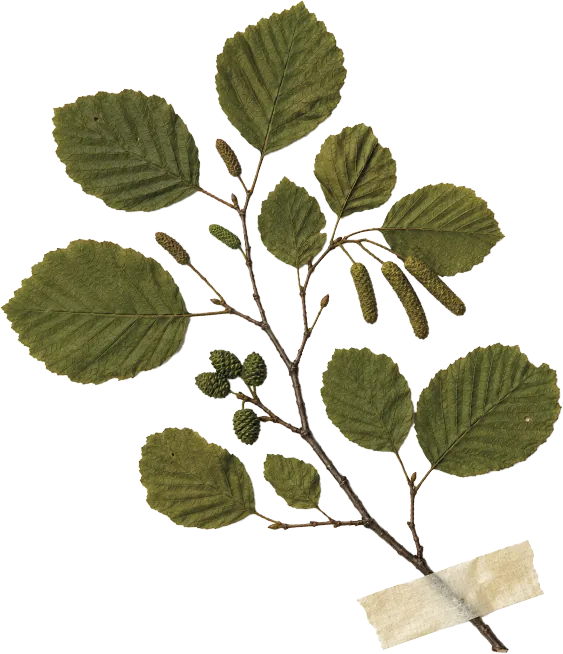
Green alder (“verne”) is an invasive shrub that spreads across shaded mountainsides. When it becomes dense, the plants typical of the zones above the treeline (bilberry, rhododendron, …) no longer grow, and all subalpine biodiversity suffers.
As alpine pastures were abandoned, the mountains were no longer maintained as they once were by a greater number of shepherds and small livestock. After mechanical cutting, alder scrub covers the ground again in less than ten years; goats, on the other hand, eat the leaves and then the bark, and kill the green alder after three to four summer grazing seasons.
Our aims
- Encourage the browsing of green alder by goats.
- Support livestock farmers so that summer grazing keeps maintaining the alpine landscape.
- Take stock of the projects carried out against green alder in Switzerland.
- Provide information on the control measures suited to each situation.
- Review the actions that benefit the black grouse.
- Defend and protect open habitats, pastures and subalpine heath.
- Bring the different types of stakeholders together around safeguarding alpine biodiversity.
History
- From 1990
Hunters at work
On the initiative of Jean-Claude Roch, a wildlife warden, the hunting community cuts green alder in the Pointe de l'Arpille reserve to keep the pasture open for the black grouse.
- 2014
First trials with goats
The Service de la faune (wildlife service) tries to work with farmers to put goats on alpine pastures. The livestock farmers lose heart and it comes to a stop.
- 2021
First paddock at L'Arpille
In collaboration with Jean-Claude Roch and the farmer, Safari Club International sets up a 2-hectare plot for goats on the Arpille alpine pasture, above the Col de la Croix. Twelve volunteer hunters put up the first fence.
- 2022
A second season
Ten volunteers return to L'Arpille. The first results are visible: the leaves are well browsed and the goats are starting on the bark of the green alder.
- January 2023
The association is born
The AATT is founded by hunters to make the project last, bring the various stakeholders together and raise funds. The approach is extended to the Les Lagots alpine pasture.
- 7 October 2023
First discovery day
Seventeen people discover the paddocks. The AATT becomes a meeting place for farmers, hunters, naturalists, researchers and volunteers.
- 2024
Six alpine pastures and a research project
Three alpine pastures with goats and three trial plots in a Research and Development Project in collaboration with Agroscope and Proconseil. 191 days of volunteering to put up the paddocks and pile up the cut alder.
- 2026
A well-practised system summed up in a toolbox
Six alpine pastures, including Seron, which has replaced Les Lagots. The experience gained is brought together in a toolbox for people who would like to reproduce what the AATT does.
The alpine pastures
Six alpine pastures in the Vaud Alps are hosting goats with the AATT in 2026, which means 13 hectares of pasture cleared of scrub.
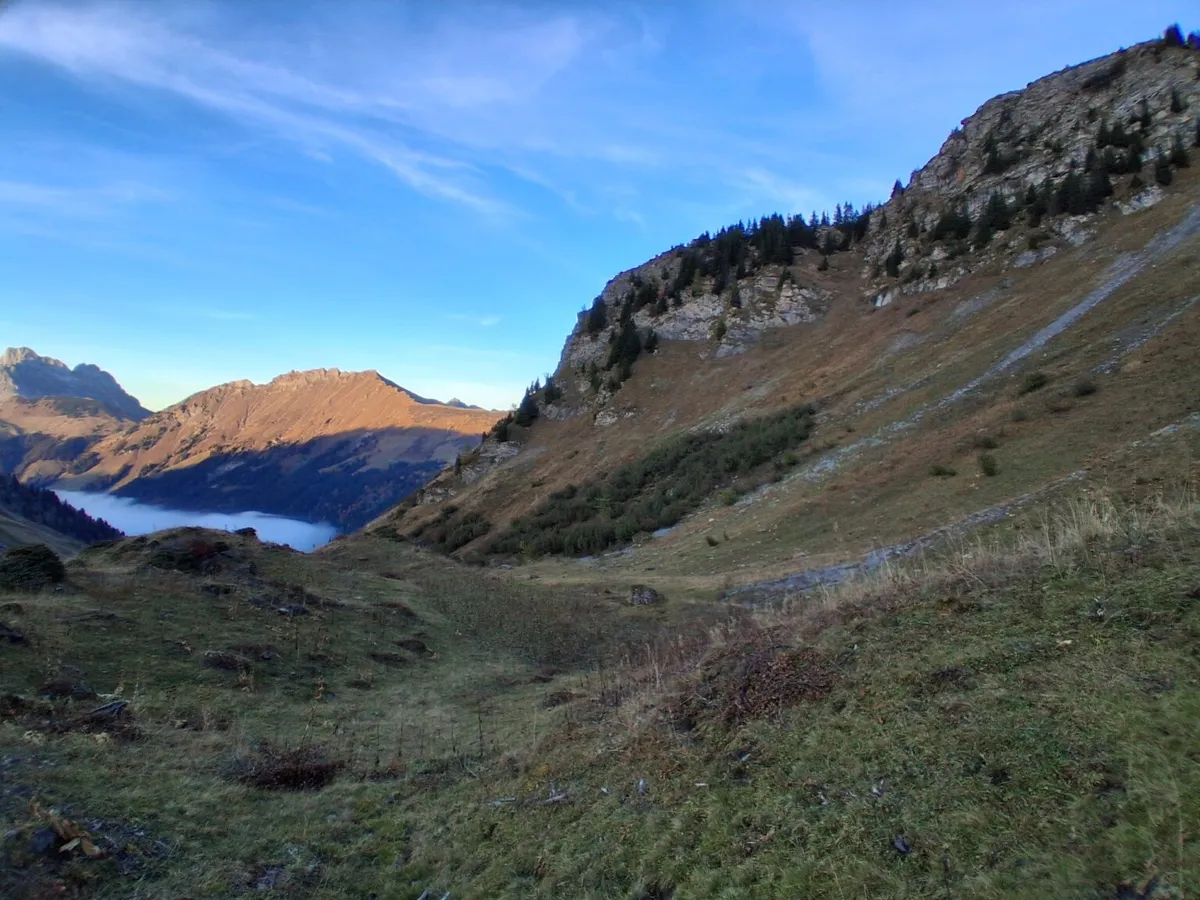
Seron
Head of the L'Etivaz valley, commune of Château-d'Œx
Hard to reach: the farmer makes several trips by 4x4 to take us up.
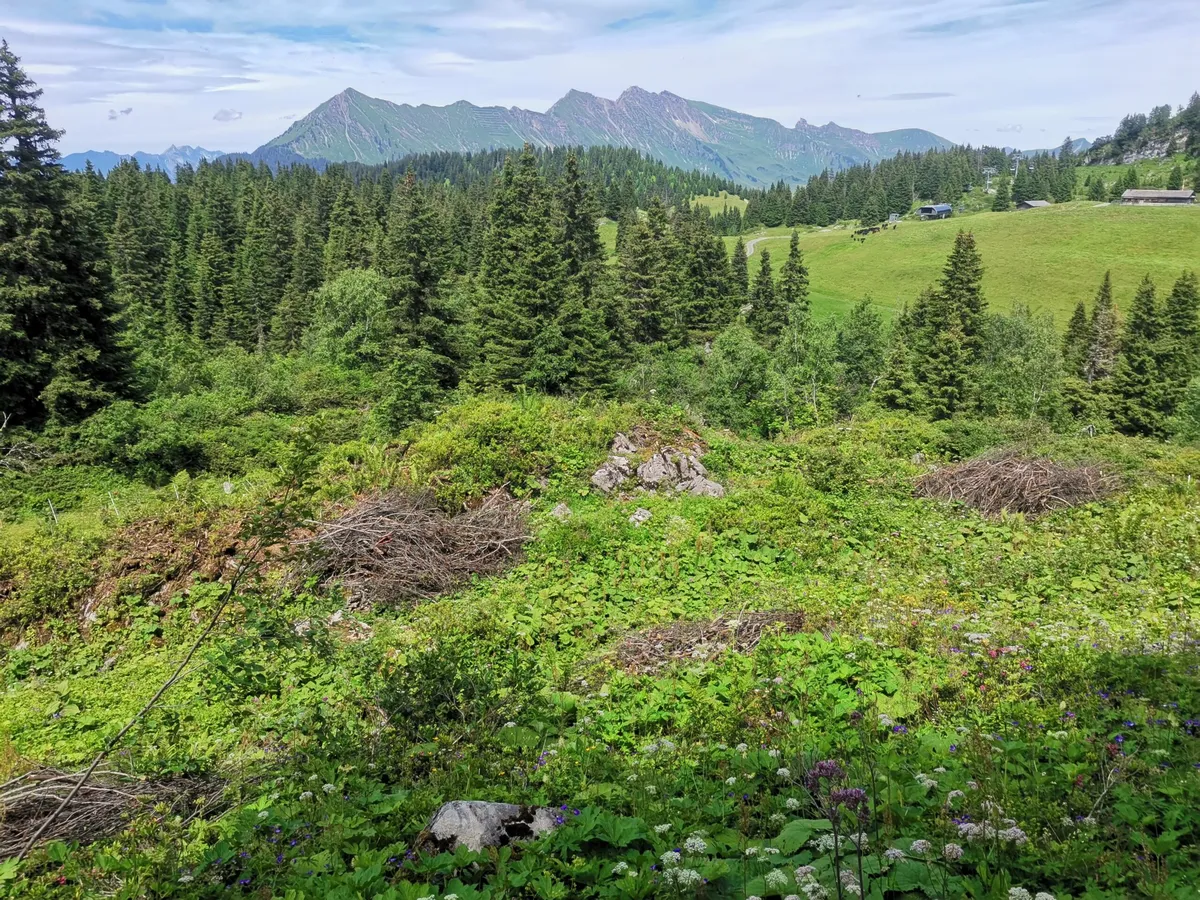
Conche
Near the Lac des Chavonnes, commune of Ormont-Dessous
The farmer's own goats, several paddocks to put up on stony ground.
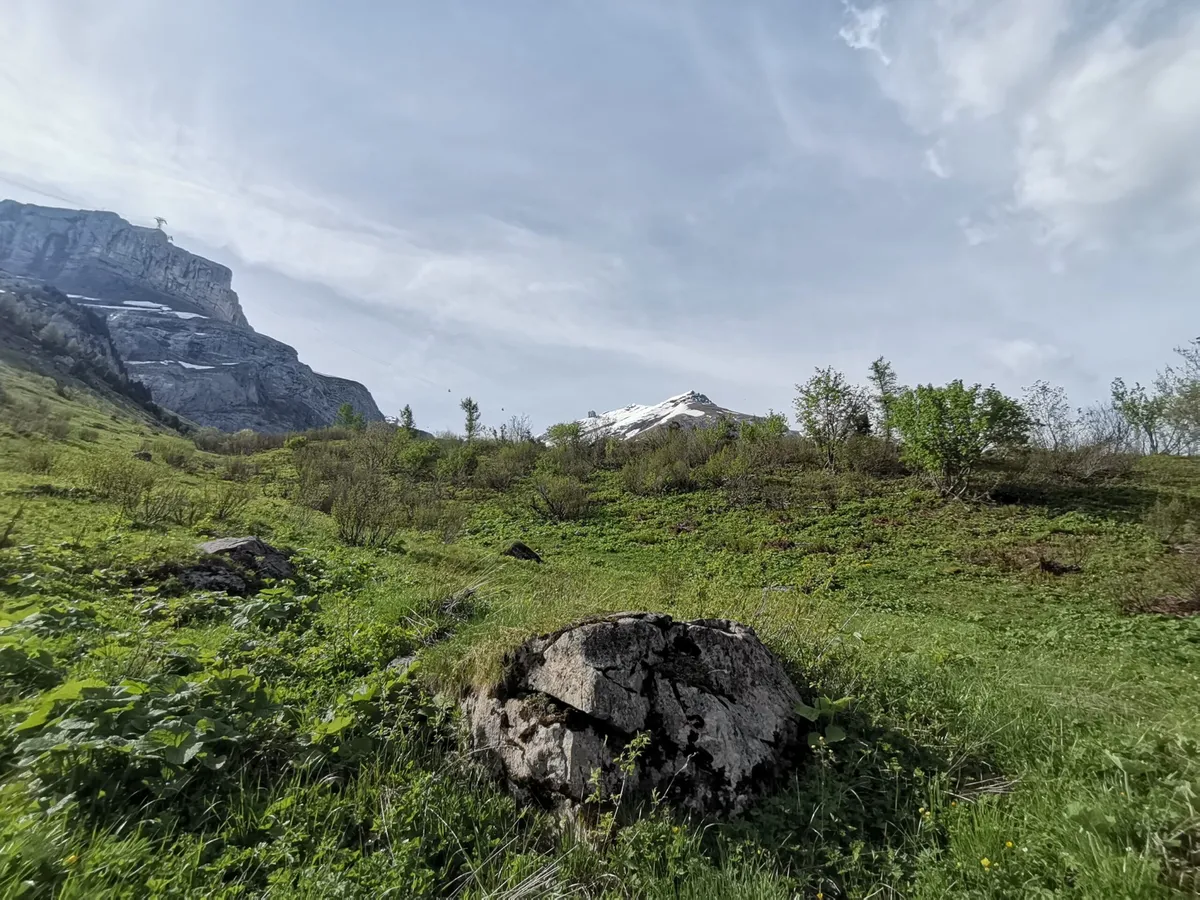
Pillon
Opposite the Glacier 3000 lift, commune of Ormont-Dessus.
New plot in an area that was cut several years ago.
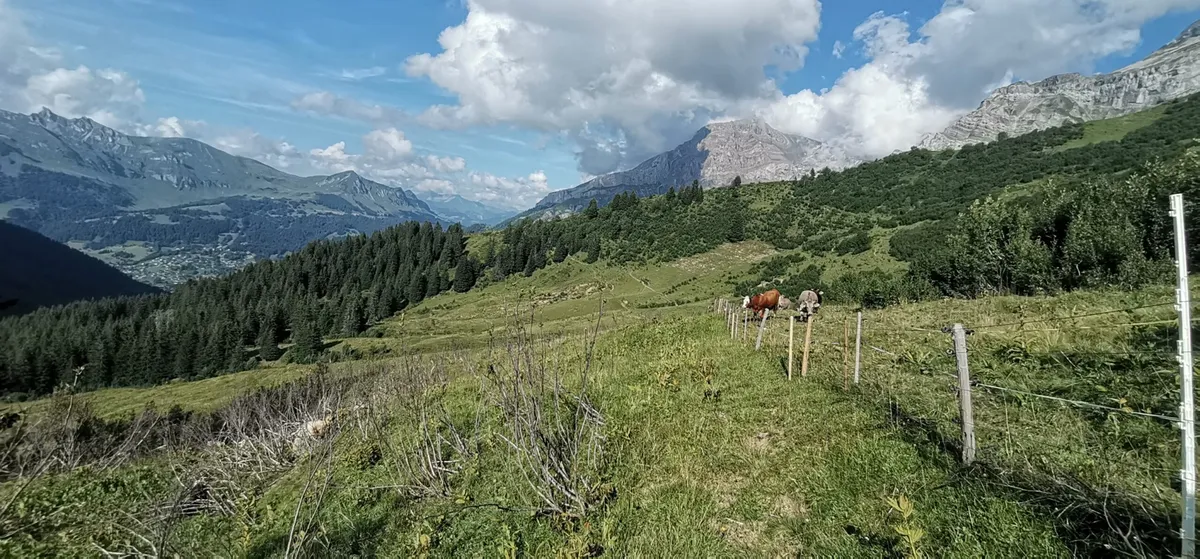
Arpille
Above the Col de la Croix, between Villars and Les Diablerets, commune of Ormont-Dessus
The project's first alpine pasture: fences put up and taken down since 2021. New plots added regularly.
Carrying on without the AATT
Once the project is under way, some alpine pastures carry on maintaining their pastures by their own means.
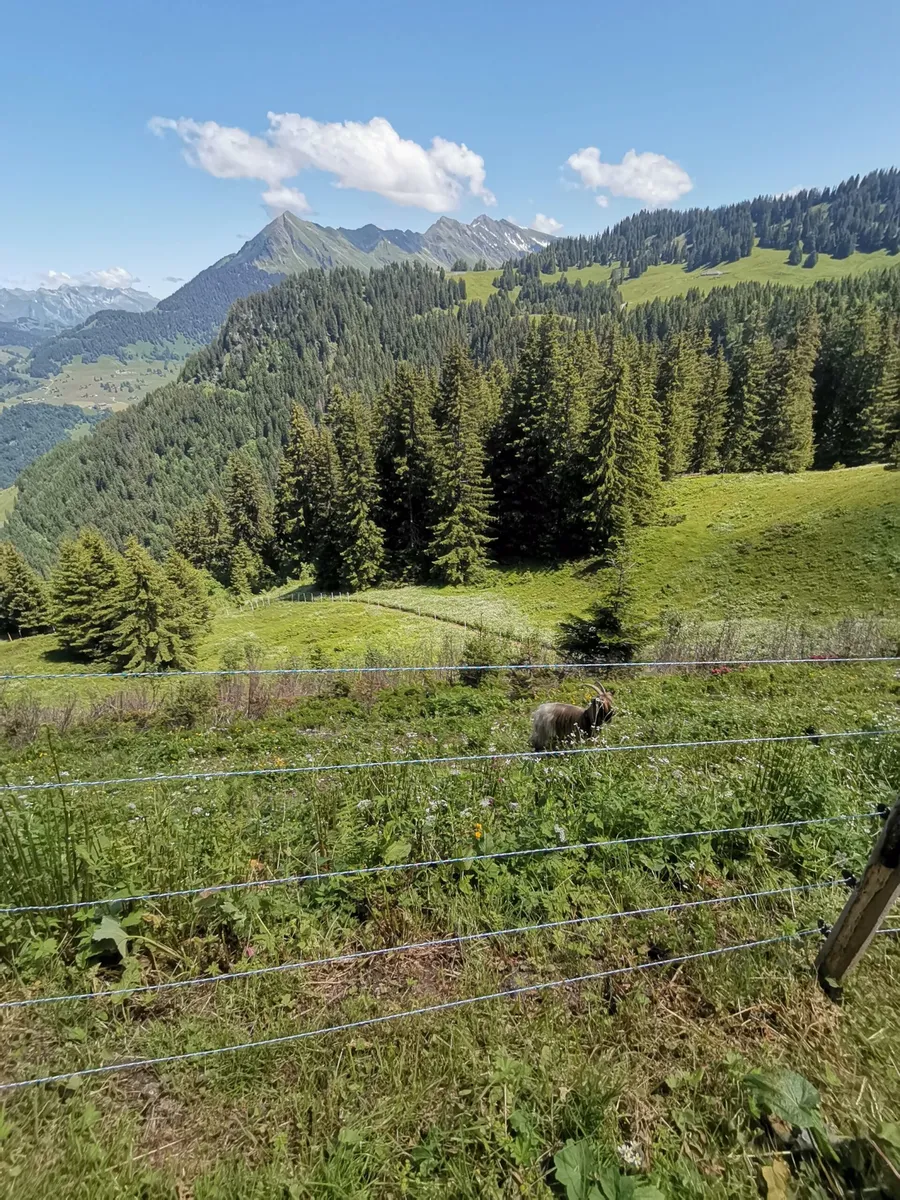
Lagots
Near the Lac des Chavonnes, commune of Ormont-Dessous, next to Conche
Fences put up and taken down by the AATT from 2023 to 2025. The new farm is carrying on with a goat keeper from Valais.
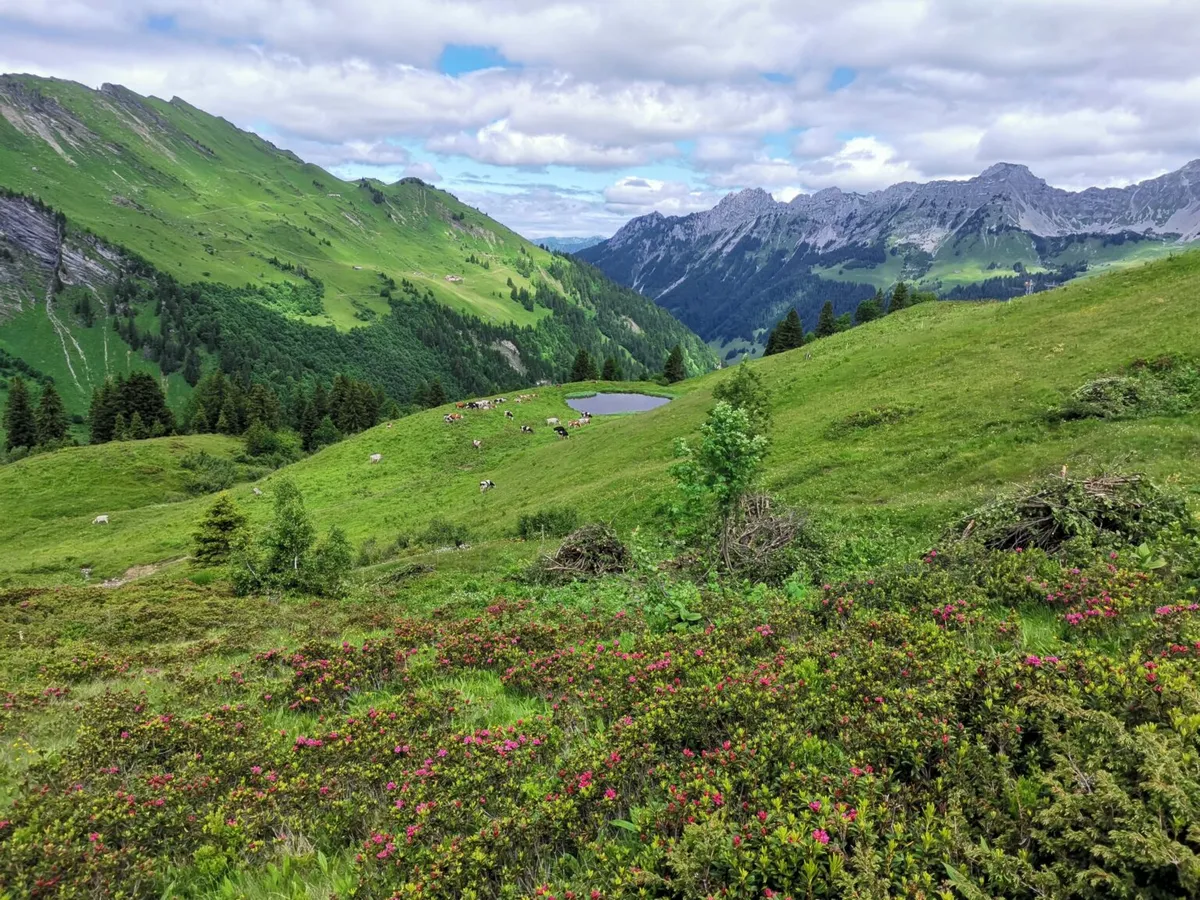
Grand Clé
Above L'Etivaz, commune of Château-d'Œx
End of the Research and Development project: the alpine farmer is carrying on with their own goats, building 4-wire paddocks.
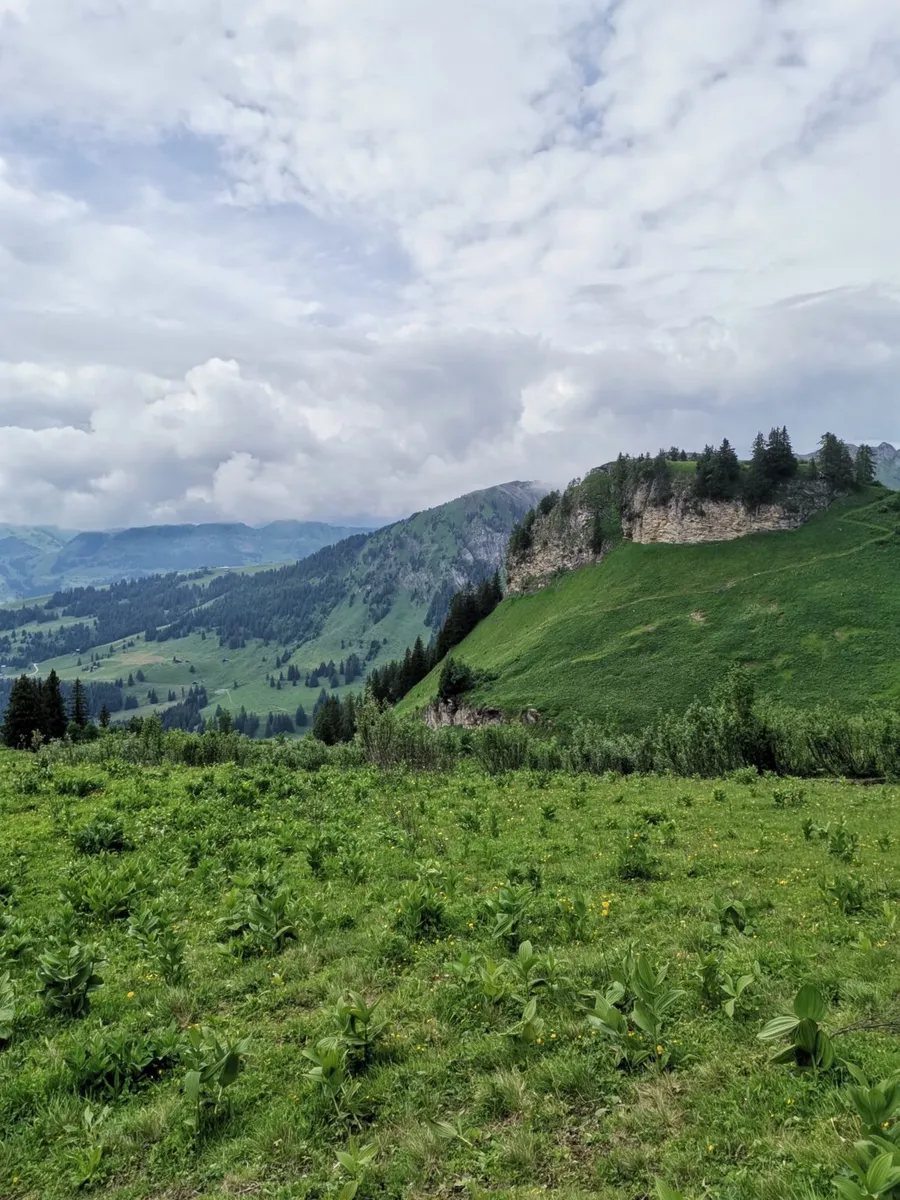
Bovonne
Above Barboleuse (Gryon), commune of Bex
End of the Research and Development project: the alpine pasture keeps its green alder in check by cutting, without goats.
Research

With Proconseil (a consultancy subsidised by the canton of Vaud) and Agroscope (the Swiss Confederation's centre of excellence for agricultural research), the AATT is testing several protocols: is mechanical cutting more effective when alternated with browsing by livestock, goats or cattle?
This Research and Development project is partly funded by the State of Vaud's Direction générale de l'agriculture (DGAV) with 175 000 CHF over three years.
Manue Piachaud · Coordinator
An etho-anthropotechnologist, she studies techniques for coexisting with wildlife to analyse the relationship between humans and animals. She coordinates the different types of stakeholders and the AATT's work days.
The research in pictures
With Agroscope and Proconseil, the AATT tested on three alpine pastures the best way to get the better of green alder: mechanical cutting combined, or not, with grazing by goats or cows.
This film presents these field trials and the groups of stakeholders taking part.
Partners
Many thanks to our funders
And to our partners for their collaboration
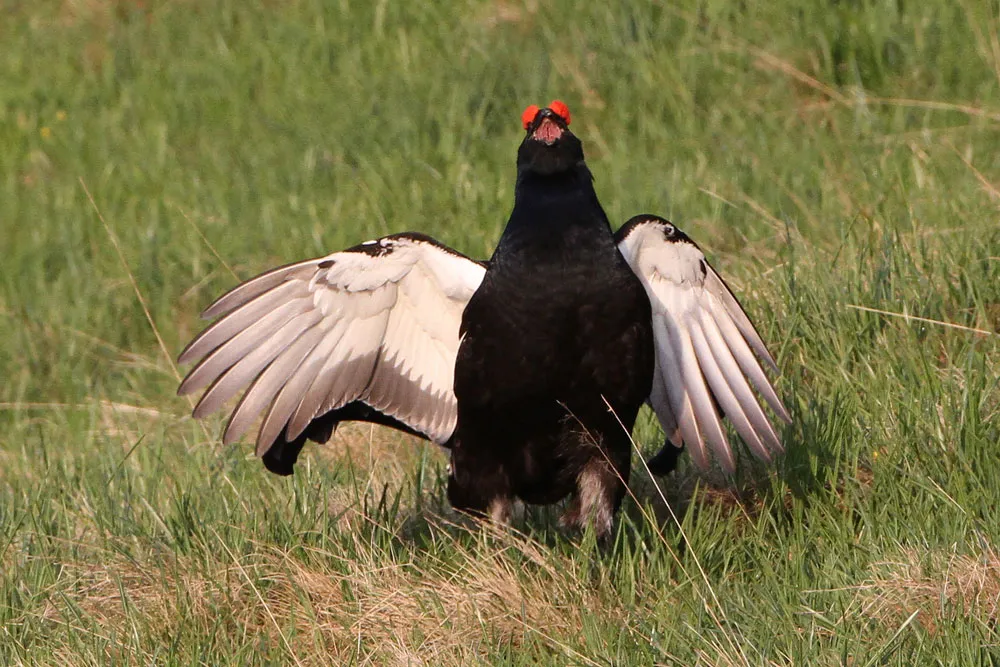
And thanks to Lionel Maumary and JP Viros for providing the black grouse photos
Membership form
Fill in this form to join the association. There is no membership fee: simply tell us how you would like to get involved.